
-
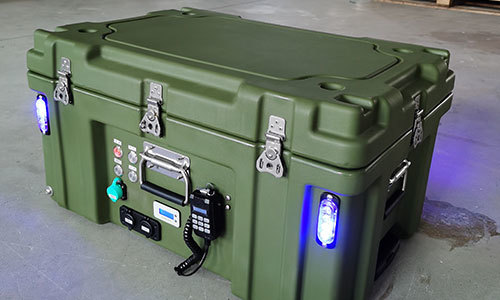 Products
Shanghai armored shield plastic technology co., ltd, brand "armored shield", is a production-oriented enterprise focusing on the research and development, design, customization, production, sales and service of special safety protection boxes; "armored shield" aims to provide integrated packaging protection solutions for major instrument and equipment manufacturers, aerospace, fire protection, medical and other industries.
-
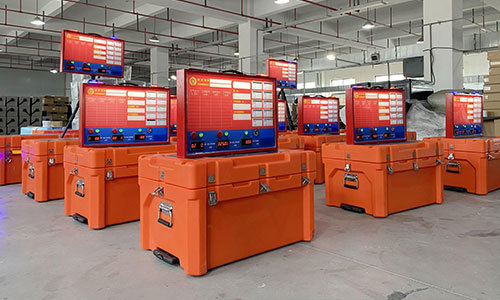 Case
CaseShanghai armored shield plastic technology co., ltd, brand "armored shield", is a production-oriented enterprise focusing on the research and development, design, customization, production, sales and service of special safety protection boxes; "armored shield" aims to provide integrated packaging protection solutions for major instrument and equipment manufacturers, aerospace, fire protection, medical and other industries.
-
 Customized
Shanghai armored shield plastic technology co., ltd, brand "armored shield", is a production-oriented enterprise focusing on the research and development, design, customization, production, sales and service of special safety protection boxes; "armored shield" aims to provide integrated packaging protection solutions for major instrument and equipment manufacturers, aerospace, fire protection, medical and other industries.
-
 Technical Q & A
Shanghai armored shield plastic technology co., ltd, brand "armored shield", is a production-oriented enterprise focusing on the research and development, design, customization, production, sales and service of special safety protection boxes; "armored shield" aims to provide integrated packaging protection solutions for major instrument and equipment manufacturers, aerospace, fire protection, medical and other industries.
-
 About
AboutShanghai armored shield plastic technology co., ltd, brand "armored shield", is a production-oriented enterprise focusing on the research and development, design, customization, production, sales and service of special safety protection boxes; "armored shield" aims to provide integrated packaging protection solutions for major instrument and equipment manufacturers, aerospace, fire protection, medical and other industries.
-
 Contact
Shanghai armored shield plastic technology co., ltd, brand "armored shield", is a production-oriented enterprise focusing on the research and development, design, customization, production, sales and service of special safety protection boxes; "armored shield" aims to provide integrated packaging protection solutions for major instrument and equipment manufacturers, aerospace, fire protection, medical and other industries.
What is a rack enclosure? What are the different types? [Image]
Classification:
- Detailed Description
-
- Commodity name: What is a rack enclosure? What are the different types? [Image]
A rack enclosure is a metal-framed structure designed to house and protect equipment, playing a vital role in the deployment of modern technological systems. Whether in audio systems, computer networks, data centers, or laboratories, rack enclosures are widely adopted and highly regarded for their structural stability, ease of installation, effective equipment protection, and straightforward maintenance.
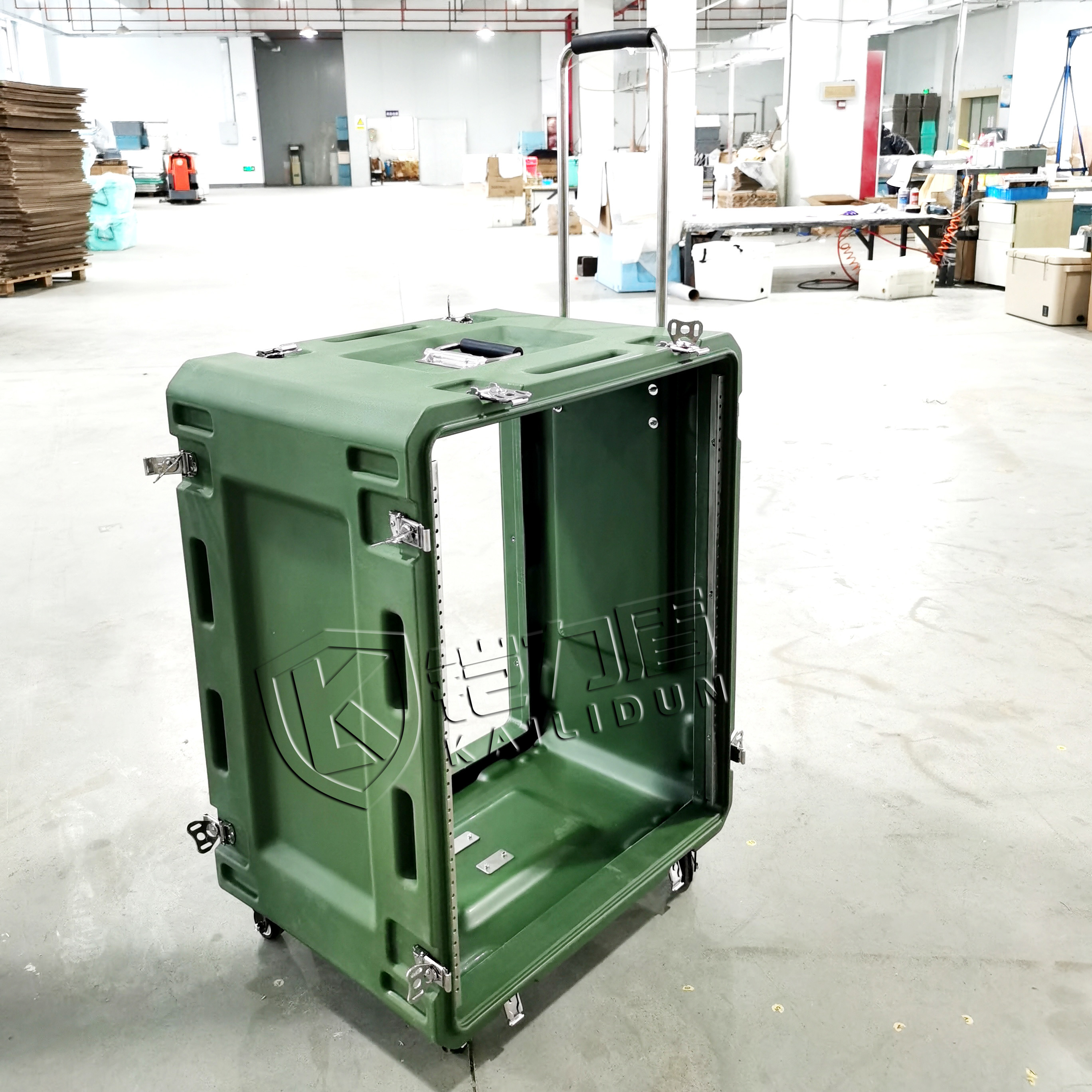
I. Basic Definition and Functions of Rack Cabinets
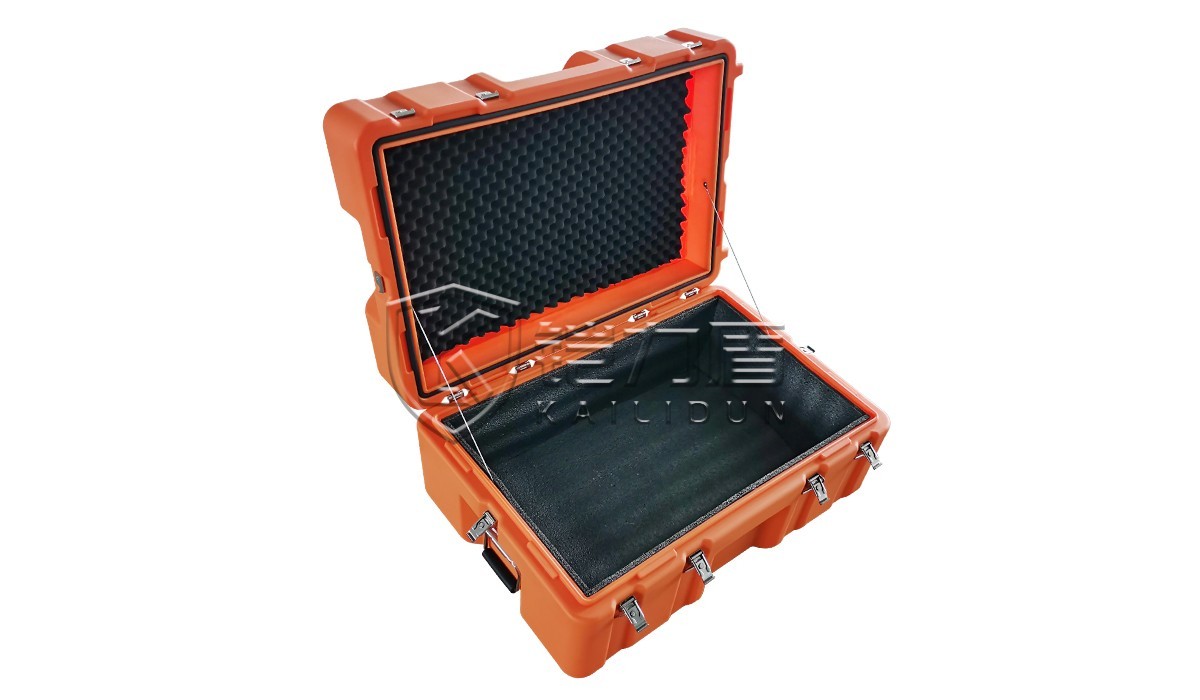
The outer enclosure of the Kaili Shield rack‑mount cabinet is integrally molded from high‑quality LLDPE using rotational molding. Inside, a series of crossbeams, vertical columns, and connecting components form a closed frame structure that supports various pieces of equipment, instruments, and components. This design not only provides stable support but also offers a degree of protection against external environmental factors such as dust, moisture, and vibration. The cabinet’s robust construction ensures excellent structural stability and load‑bearing capacity, guaranteeing safe and reliable operation.
1. Structural stability: Rack enclosures are manufactured from metal materials such as cold-rolled steel sheet or aluminum profiles, which offer high strength and excellent toughness, enabling them to withstand various external forces.
2. Easy installation: The crossbeams and uprights of rack cabinets typically adhere to standard dimensions, allowing for custom fabrication or modular assembly to facilitate equipment installation and removal. Moreover, many rack cabinets feature a modular design, making equipment maintenance and upgrades more convenient.
3. Protective Equipment: Rack enclosures effectively protect equipment from external environmental factors, thereby extending its service life. At the same time, they provide a degree of electromagnetic shielding, reducing mutual interference between devices.
4. Easy to maintain: The rack‑mount enclosure’s modular design makes equipment maintenance and upgrades simple and fast. Users can easily add or remove components as needed, without requiring extensive modifications to the entire system.
II. Types of Rack Cabinets
Rack enclosures come in a wide variety of types, which can be classified according to different criteria. Below are some common types of rack enclosures:
1. Classification by material:
① Metal rack enclosure: As mentioned above, metal rack enclosures boast high strength and excellent toughness, enabling them to withstand substantial external forces. They are typically employed in applications that demand superior stability and load-bearing capacity.
② Wooden rack enclosure: Although wooden rack‑mounted enclosures have relatively lower load‑bearing capacity, they offer superior sound damping, delivering improved audio quality. Consequently, they are frequently employed in audio systems and related applications.
2. Classification by application scenario:
① Audio system rack enclosure: These rack enclosures are primarily used to protect and secure audio equipment, such as power amplifiers and loudspeakers. They typically feature robust structural stability and high load-bearing capacity to ensure that the equipment remains stable during operation.
②Computer system rack enclosure: Computer system rack enclosures are primarily used to house and protect computer hardware, such as motherboards, hard drives, and power supplies. They typically feature standard dimensions and a modular design, making it easy for users to install, maintain, and upgrade their equipment.
③ Data center rack enclosure: Data center rack cabinets are framework structures used in data centers to house and protect critical equipment such as servers and storage devices. They typically feature superior heat dissipation and load-bearing capabilities to ensure the reliable operation of data center equipment.
④ Laboratory Rack Cabinet: Laboratory rack enclosures are primarily used to house and protect laboratory equipment, such as oscilloscopes and signal generators. They typically feature compact dimensions and high precision to meet the specialized requirements of laboratory settings.
3. Classification by structural form:
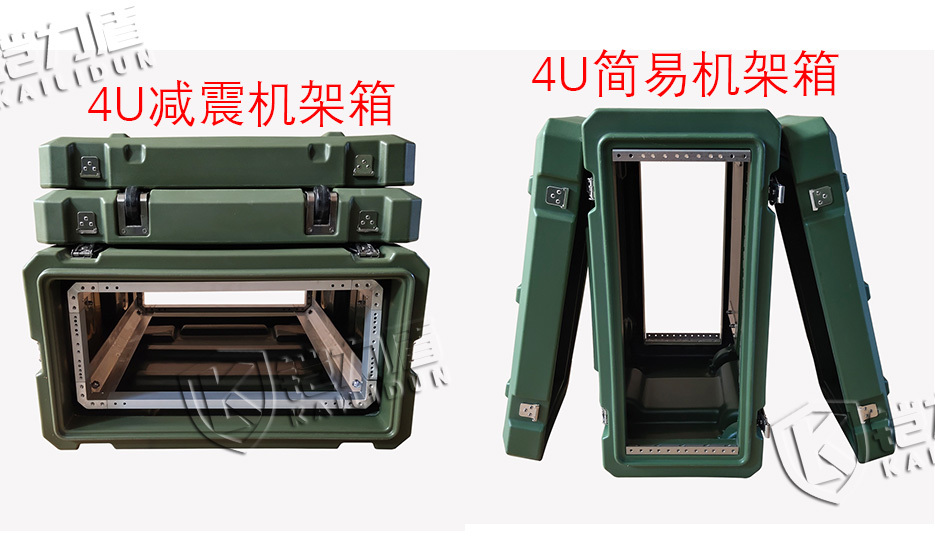
① Shock-absorbing frame housing: As the name suggests, this type of rack enclosure features shock‑absorbing capabilities, effectively safeguarding the internal instruments and equipment from external impacts. The Kaili Shield shock‑absorbing rack enclosure is equipped with eight shock absorbers—comprising stainless steel springs and high‑quality rubber rings—securely mounted at each of its eight corners, significantly reducing damage to the equipment caused by external shocks during operation.
②Simple rack-mounted enclosure: This refers to rack enclosures that do not include shock absorbers and therefore lack vibration-damping capabilities, making them suitable for instruments and equipment with modest shock‑absorption requirements. Such enclosures are more cost‑effective, more compact, and both portable and durable.
Key words:
rotomolding airdrop box | safety protection box | server rack box | Aviation aluminum box | cold chain incubator | fire cart
Online consultation
If you are interested in our products, please leave your email and get the product quotation for free, thank you!

A production-oriented enterprise focusing on the research and development, design, customization, production, sales and service of special safety protection boxes; "armored shield" aims to provide integrated packaging protection solutions for major instrument and equipment manufacturers, aerospace, fire protection, medical and other industries.


Contact Us
Service Hotline: 139-1747-5956
Service Hotline:137-6128-2604
E-mail:sales@kldcases.com
Company address: 703A, Building A8, Kangqiao Business Oasis, caohejing, Pudong New Area, Shanghai
Factory address: 500 Yedao Road, Xitangqiao Town, Haiyan County, Jiaxing City, Zhejiang Province

Sweep and add WeChat
Learn more about products
Links: