
-
 Products
Shanghai armored shield plastic technology co., ltd, brand "armored shield", is a production-oriented enterprise focusing on the research and development, design, customization, production, sales and service of special safety protection boxes; "armored shield" aims to provide integrated packaging protection solutions for major instrument and equipment manufacturers, aerospace, fire protection, medical and other industries.
-
 Case
CaseShanghai armored shield plastic technology co., ltd, brand "armored shield", is a production-oriented enterprise focusing on the research and development, design, customization, production, sales and service of special safety protection boxes; "armored shield" aims to provide integrated packaging protection solutions for major instrument and equipment manufacturers, aerospace, fire protection, medical and other industries.
-
 Customized
Shanghai armored shield plastic technology co., ltd, brand "armored shield", is a production-oriented enterprise focusing on the research and development, design, customization, production, sales and service of special safety protection boxes; "armored shield" aims to provide integrated packaging protection solutions for major instrument and equipment manufacturers, aerospace, fire protection, medical and other industries.
-
 Technical Q & A
Shanghai armored shield plastic technology co., ltd, brand "armored shield", is a production-oriented enterprise focusing on the research and development, design, customization, production, sales and service of special safety protection boxes; "armored shield" aims to provide integrated packaging protection solutions for major instrument and equipment manufacturers, aerospace, fire protection, medical and other industries.
-
 About
AboutShanghai armored shield plastic technology co., ltd, brand "armored shield", is a production-oriented enterprise focusing on the research and development, design, customization, production, sales and service of special safety protection boxes; "armored shield" aims to provide integrated packaging protection solutions for major instrument and equipment manufacturers, aerospace, fire protection, medical and other industries.
-
 Contact
Shanghai armored shield plastic technology co., ltd, brand "armored shield", is a production-oriented enterprise focusing on the research and development, design, customization, production, sales and service of special safety protection boxes; "armored shield" aims to provide integrated packaging protection solutions for major instrument and equipment manufacturers, aerospace, fire protection, medical and other industries.
Maintenance Box Configuration Specifications
As an indispensable component of the power system, the proper configuration of maintenance cabinets directly impacts the efficiency and safety of maintenance operations. Kaili Dun, as a manufacturer, will explore the standards for configuring these cabinets, with the aim of providing guidance for relevant professionals.
Kaili Shield specializes in the custom manufacturing of a wide range of waterproof protective cases, toolboxes, maintenance boxes, and instrument‑equipment enclosures, and provides corresponding test reports. In addition to adhering to standardized configurations, maintenance boxes also require particularly careful selection of exterior materials.
I. Principles for Configuring Maintenance Boxes
The configuration of the maintenance box shall adhere to the following principles:
Security: The maintenance box shall have excellent insulation properties and an appropriate protection rating to ensure the safety of operators.
Reliability: The maintenance box shall be equipped with reliable components and undergo rigorous testing to ensure its long-term stable operation.
Practicality: The configuration of the maintenance box shall meet actual maintenance requirements, be easy to operate, and facilitate maintenance.
Economic efficiency: Subject to the aforementioned principles, the configuration cost of the maintenance box should be minimized.

II. Contents of the Maintenance Box Configuration
The configuration of the maintenance box should be determined based on the specific application scenario and requirements, typically encompassing the following aspects:
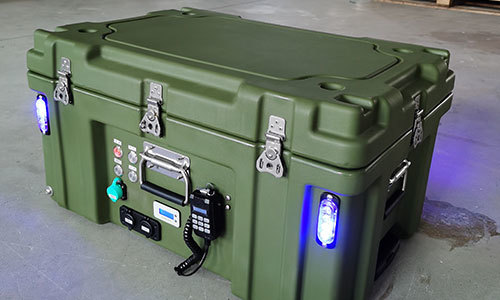
Enclosure: The enclosure material should be corrosion‑resistant and impact‑proof, such as stainless steel or engineering plastics. The Kaili Shield maintenance box is made of engineering plastic, offering excellent corrosion resistance and impact performance, superior toughness, and an IP67 waterproof rating. The enclosure dimensions should be designed appropriately based on the number and size of the internal components, with sufficient space reserved for future expansion.
Electrical components: The maintenance cabinet shall be equipped with the necessary electrical components, such as circuit breakers, disconnect switches, fuses, and terminal blocks. Component selection shall comply with applicable standards and meet the current, voltage, and other parameter requirements of the maintenance work.
Instrumentation: The maintenance box can be equipped with instruments such as voltmeters and ammeters, enabling operators to monitor line conditions in real time. Lighting: The maintenance box shall be fitted with lighting to facilitate inspection and maintenance work under low‑light conditions. Earthing: The maintenance box must be provided with a reliable earthing system to ensure the safety of both equipment and personnel.
Signage: The maintenance box shall be equipped with clear identification signs, indicating the box number, voltage level, responsible person, and other relevant information.
III. Precautions for Configuring Maintenance Boxes
When configuring the maintenance box, please note the following:
Environmental factors: The temperature, humidity, altitude, and other environmental factors of the maintenance box installation site should be taken into account when selecting appropriate components and determining the required protection rating.
Workspace: The interior of the maintenance box shall provide sufficient operating space to facilitate wiring, maintenance, and other tasks by operators.
Ventilation and Heat Dissipation: The ventilation and heat dissipation of the maintenance enclosure should be carefully considered to prevent component damage caused by excessive temperatures.
Dustproof and waterproof: The appropriate dustproof and waterproof rating should be selected based on the installation environment to prevent dust, moisture, and other contaminants from entering the enclosure.
Security Protection: Necessary safety safeguards, such as door locks and warning signs, shall be installed to prevent unauthorized personnel from operating the equipment inadvertently.
IV. Maintenance and Management of Inspection Boxes
To ensure the proper operation of the maintenance box, it should be regularly maintained and managed:
Regular inspections: The maintenance box should be inspected regularly, covering the enclosure’s exterior, electrical components, terminal blocks, and other parts, to promptly identify and address potential hazards.
Cleaning and Maintenance: The maintenance box should be cleaned and maintained regularly to remove dust, dirt, and other contaminants, ensuring that the interior remains clean and dry.
Record Archiving: A maintenance record should be established for the maintenance box, documenting inspections, routine upkeep, and repairs to facilitate future inquiries and management.
V. Conclusion
The configuration standards for maintenance boxes are a critical component in ensuring the safe and stable operation of power systems. Relevant personnel should strictly adhere to these standards during installation and maintenance, thereby guaranteeing the safe and reliable operation of maintenance boxes and safeguarding the secure and stable functioning of the power system.
Kaili Shield would like to remind everyone that the above information is for reference only; specific configuration specifications should be determined in accordance with actual conditions and applicable standards.
Key words:
rotomolding airdrop box | safety protection box | server rack box | aviation aluminum box | cold chain insulation box | fire cart
RELATED INFORMATION



A production-oriented enterprise focusing on the research and development, design, customization, production, sales and service of special safety protection boxes; "armored shield" aims to provide integrated packaging protection solutions for major instrument and equipment manufacturers, aerospace, fire protection, medical and other industries.


Contact Us
Service Hotline: 139-1747-5956
Service Hotline:137-6128-2604
E-mail:sales@kldcases.com
Company address: 703A, Building A8, Kangqiao Business Oasis, caohejing, Pudong New Area, Shanghai
Factory address: 500 Yedao Road, Xitangqiao Town, Haiyan County, Jiaxing City, Zhejiang Province

Sweep and add WeChat
Learn more about products
Links: