
-
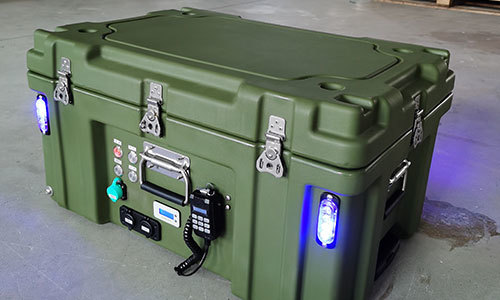 Products
Shanghai armored shield plastic technology co., ltd, brand "armored shield", is a production-oriented enterprise focusing on the research and development, design, customization, production, sales and service of special safety protection boxes; "armored shield" aims to provide integrated packaging protection solutions for major instrument and equipment manufacturers, aerospace, fire protection, medical and other industries.
-
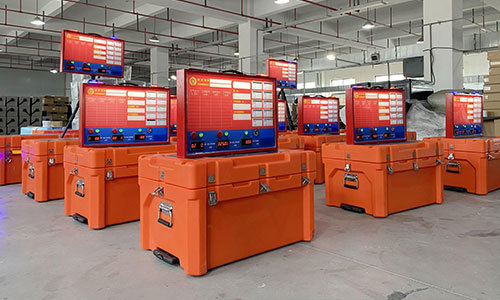 Case
CaseShanghai armored shield plastic technology co., ltd, brand "armored shield", is a production-oriented enterprise focusing on the research and development, design, customization, production, sales and service of special safety protection boxes; "armored shield" aims to provide integrated packaging protection solutions for major instrument and equipment manufacturers, aerospace, fire protection, medical and other industries.
-
 Customized
Shanghai armored shield plastic technology co., ltd, brand "armored shield", is a production-oriented enterprise focusing on the research and development, design, customization, production, sales and service of special safety protection boxes; "armored shield" aims to provide integrated packaging protection solutions for major instrument and equipment manufacturers, aerospace, fire protection, medical and other industries.
-
 Technical Q & A
Shanghai armored shield plastic technology co., ltd, brand "armored shield", is a production-oriented enterprise focusing on the research and development, design, customization, production, sales and service of special safety protection boxes; "armored shield" aims to provide integrated packaging protection solutions for major instrument and equipment manufacturers, aerospace, fire protection, medical and other industries.
-
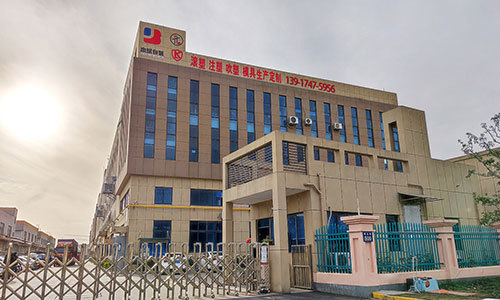 About
AboutShanghai armored shield plastic technology co., ltd, brand "armored shield", is a production-oriented enterprise focusing on the research and development, design, customization, production, sales and service of special safety protection boxes; "armored shield" aims to provide integrated packaging protection solutions for major instrument and equipment manufacturers, aerospace, fire protection, medical and other industries.
-
 Contact
Shanghai armored shield plastic technology co., ltd, brand "armored shield", is a production-oriented enterprise focusing on the research and development, design, customization, production, sales and service of special safety protection boxes; "armored shield" aims to provide integrated packaging protection solutions for major instrument and equipment manufacturers, aerospace, fire protection, medical and other industries.
What outstanding performance has the Kaili Shield fire safety officer’s carry case demonstrated in real-world applications?
The Kaili Shield Fire Safety Officer’s portable carry case has demonstrated multi‑dimensional technological innovation and practical operational value in real‑world applications. Its design philosophy and functional configuration are closely aligned with the complex demands of fire rescue operations. The following analysis examines its contributions from two perspectives: core technological breakthroughs and typical application scenarios.

I. Breakthroughs in Core Technologies and Functional Innovations
1. Modular Integration and Rapid Response Capability
Modern carry cases feature a layered, compartmentalized design that integrates detection, early warning, communication, lighting, and other equipment into a single unit. For example, the Kaili Shield firefighter’s carry case houses 18 types of devices, including a portable infrared thermal imager, a toxic gas detector, and an electronic writing tablet, with precision‑molded EVA foam inserts for secure positioning, enabling firefighters to retrieve their gear in under 30 seconds. Some models even support rapid switching between functional modules; for instance, the 72‑hour emergency backpack can be detached into leg packs, chest packs, and top packs, reducing shoulder load by up to 40% during climbing and allowing the chest pack to be removed before entering a fire zone to prevent friction‑induced ignition.
2. Intelligent Connectivity and Data Integration
The next-generation fire safety officer’s portable kit leverages IoT technology to enable device interconnectivity. The Kaili Dun emergency command box integrates a command‑video terminal, a dispatch console, and an audio‑video matrix, allowing simultaneous access to 160°C thermal data from a robotic dog, real-time video feeds from a dual‑optic helmet, and structural‑prewarning signals from a dual‑laser displacement sensor. Commanders can perform multi‑dimensional data analysis through a unified interface, boosting decision‑making efficiency by more than 60%. Certain models also feature an RFID smart‑identification system, enabling handheld terminals to rapidly retrieve equipment information and address the longstanding challenge of locating gear in traditional asset management.
3. Adaptability to Extreme Environments and Safety Protection
Kaili shield enclosures are typically made from high‑strength plastic, offering an impact resistance of 800 N/m² and passing a 2‑meter drop test. With an IP66 waterproof rating, they can withstand immersion at a depth of 1.5 meters for 30 minutes without leakage. Certain models feature a built-in fire‑resistant liner that can endure temperatures between 135°C and 145°C, making them suitable for high‑risk environments such as chemical fires.
4. Communications Support and Command Coordination
The Kaili Dun firefighting carry‑all has become a field communications hub; for example, its command unit supports ad‑hoc network relay, enabling multi‑hop signal forwarding in enclosed environments such as collapsed subway tunnels and ensuring real‑time transmission of instructions. Certain models are equipped with a remotely controlled high‑intensity loudspeaker—delivering at least 120 decibels and operable from up to 500 meters—enabling cross‑area command even in noisy settings. Moreover, to address the challenges of traditional flag‑based signaling—such as flags being easily lost or difficult to stow—some configurations innovatively mount regulatory flags to the lid via spring‑loaded cords.

II. Typical Scenario Applications and Practical Value
1. Firefighting in High-Rise Buildings
In a 32‑story residential fire, firefighters used Kaili Shield rotomolded cases to carry 12 walkie-talkies and their chargers. Thanks to a tiered storage design, they rapidly established a communication network and evacuated trapped occupants from floors 15 to 25 in just 12 minutes—40% faster than conventional methods. The cases’ waterproof and shock‑proof construction ensured that critical documents such as construction blueprints and inspection reports remained intact at the scene, providing essential data for tactical planning.
2. Underground Spaces and Chemical Disaster Response
For signal‑dead zones such as underground parking garages and subway tunnels, the portable kit incorporates a built-in repeater and a long antenna; when configured in a daisy‑chain network, it can relay on‑site signals to the ground command center. In the event of a chemical storage tank leak, the explosion‑proof materials of the Kaili Shield fire‑fighting portable kit prevent sparks from triggering secondary explosions, while its custom‑designed compartments ensure the secure storage of protective suits, gas detectors, and other equipment. On‑site perimeter control and evacuation can be completed within eight minutes, boosting efficiency by 60%.
3. Forest Fires and Wildland Rescue
In addition to carry‑on cases, rescuers can also rely on backpacks in certain specialized rescue scenarios. For example, the Kaili Shield 72‑hour emergency backpack features an all‑aluminum alloy frame and a durable TPU fabric; even when carrying 30 kg of gear for up to 48 hours in dense forest terrain, it remains stable. Its detachable modular design allows firefighters to flexibly adjust weight distribution when navigating muddy forest paths. Some models are equipped with off‑road tires—such as the Kaili Shield fire‑fighting trolley case—enabling them to handle challenging terrains like sand and gravel and swiftly transport equipment during mountain rescue operations.
4. Urban Complexes and Large-Scale Event Security
In high‑traffic venues such as shopping malls and convention centers, the real-time early‑warning capabilities of firefighters’ portable kits play a critical role. For instance, during a fire at one shopping mall, firefighters used the kit’s combustible‑gas detector to promptly pinpoint the leak location and, in conjunction with a remote alarm system, guided more than 2,000 customers to evacuate in an orderly manner, thereby preventing mass casualties.
III. Efficiency Enhancement and Cost Optimization
Response Time Compression: Equipment deployment time has been reduced from an average of 3 minutes to 30 seconds. For example, during a fire in a Shanghai residential community, firefighters used modular carry cases to set up a communication network in under 2 minutes, cutting the time by 70% compared with conventional methods.
Equipment wear reduction: Centralized management has reduced the walkie-talkie failure rate from 15% to 5% and the thermal imager battery loss rate from 10% to 2%, enabling one fire squad to save over RMB 100,000 in annual maintenance costs.
Lowered training requirements: An intuitive user interface and standardized interface design enable frontline firefighters to quickly master the equipment without extensive training, offering a distinct advantage, particularly during inter‑regional reinforcement operations.

IV. Future Development Trends
Currently, fire safety operator carry‑on cases are evolving from mere “tool carriers” to “intelligent operational units.” By 2025, the latest models will be equipped with AI‑powered analytics modules capable of real‑time modeling of fire‑scene temperature distributions and the dispersion paths of toxic gases. The Kaili Dun brand is pioneering the integration of AR technology into the case’s display screen, enabling navigation along rescue routes and visual guidance for equipment operation. Moreover, the use of eco‑friendly materials—such as biodegradable liners—and lightweight design innovations—like carbon‑fiber gas cylinders—are emerging as key R&D priorities, further enhancing the long-term sustainability of these systems.
In summary, the Kaili Shield Fire Safety Officer Carry‑On Case, thanks to technological innovation and scenario‑specific adaptation, has become an indispensable “mobile command center” within modern fire‑rescue systems. Its development not only enhances individual operational capabilities but also accelerates the transition of fire‑rescue operations toward an intelligent, data‑driven, precision‑focused, and highly efficient model.
Key words:
rotomolding airdrop box | safety protection box | server rack box | aviation aluminum box | cold chain insulation box | fire cart
RELATED INFORMATION



A production-oriented enterprise focusing on the research and development, design, customization, production, sales and service of special safety protection boxes; "armored shield" aims to provide integrated packaging protection solutions for major instrument and equipment manufacturers, aerospace, fire protection, medical and other industries.


Contact Us
Service Hotline: 139-1747-5956
Service Hotline:137-6128-2604
E-mail:sales@kldcases.com
Company address: 703A, Building A8, Kangqiao Business Oasis, caohejing, Pudong New Area, Shanghai
Factory address: 500 Yedao Road, Xitangqiao Town, Haiyan County, Jiaxing City, Zhejiang Province

Sweep and add WeChat
Learn more about products
Links: