
-
 Products
Shanghai armored shield plastic technology co., ltd, brand "armored shield", is a production-oriented enterprise focusing on the research and development, design, customization, production, sales and service of special safety protection boxes; "armored shield" aims to provide integrated packaging protection solutions for major instrument and equipment manufacturers, aerospace, fire protection, medical and other industries.
-
 Case
CaseShanghai armored shield plastic technology co., ltd, brand "armored shield", is a production-oriented enterprise focusing on the research and development, design, customization, production, sales and service of special safety protection boxes; "armored shield" aims to provide integrated packaging protection solutions for major instrument and equipment manufacturers, aerospace, fire protection, medical and other industries.
-
 Customized
Shanghai armored shield plastic technology co., ltd, brand "armored shield", is a production-oriented enterprise focusing on the research and development, design, customization, production, sales and service of special safety protection boxes; "armored shield" aims to provide integrated packaging protection solutions for major instrument and equipment manufacturers, aerospace, fire protection, medical and other industries.
-
 Technical Q & A
Shanghai armored shield plastic technology co., ltd, brand "armored shield", is a production-oriented enterprise focusing on the research and development, design, customization, production, sales and service of special safety protection boxes; "armored shield" aims to provide integrated packaging protection solutions for major instrument and equipment manufacturers, aerospace, fire protection, medical and other industries.
-
 About
AboutShanghai armored shield plastic technology co., ltd, brand "armored shield", is a production-oriented enterprise focusing on the research and development, design, customization, production, sales and service of special safety protection boxes; "armored shield" aims to provide integrated packaging protection solutions for major instrument and equipment manufacturers, aerospace, fire protection, medical and other industries.
-
 Contact
Shanghai armored shield plastic technology co., ltd, brand "armored shield", is a production-oriented enterprise focusing on the research and development, design, customization, production, sales and service of special safety protection boxes; "armored shield" aims to provide integrated packaging protection solutions for major instrument and equipment manufacturers, aerospace, fire protection, medical and other industries.
Airdrop Supply Crate: A Beacon of Hope on the Brink of Death
In the face of disaster, humanity consistently demonstrates extraordinary resilience and solidarity. In the recent South Korean airliner crash, airdropped supply containers have once again drawn public attention. These small boxes not only carry urgently needed supplies but also serve as beacons of hope in moments of life and death.
[The Core Value of Airdrop Supply Containers: Rapid Response and Precise Assistance] During the critical first 72 hours following any disaster, the efficiency and accuracy of rescue operations directly determine the survival chances of those affected. As a vital rescue tool, airdrop supply containers, with their unique advantages, play an indispensable role in disaster relief efforts.
1. Time Efficiency
Air transport is one of the fastest modes of transportation today, capable of delivering supplies to disaster areas in a short time. Particularly in regions where roads are cut off or the terrain is extremely rugged, airdropping supply containers is often the only viable option.
2. Precise Targeting
Modern airdrop technology leverages satellite positioning and high-precision navigation to deliver supply containers to designated locations, ensuring that resources are neither wasted nor misallocated and maximizing support for disaster victims. Take the December 29, 2024, South Korean passenger aircraft crash as an example: the accident occurred within Jeju Airport, where the aircraft exploded and caught fire after colliding with a concrete wall, presenting significant challenges for rescue operations. Airdropped supply containers not only provided rescuers with drinking water, food, and medical supplies but also supplied fuel and equipment, greatly accelerating search-and-rescue efforts.
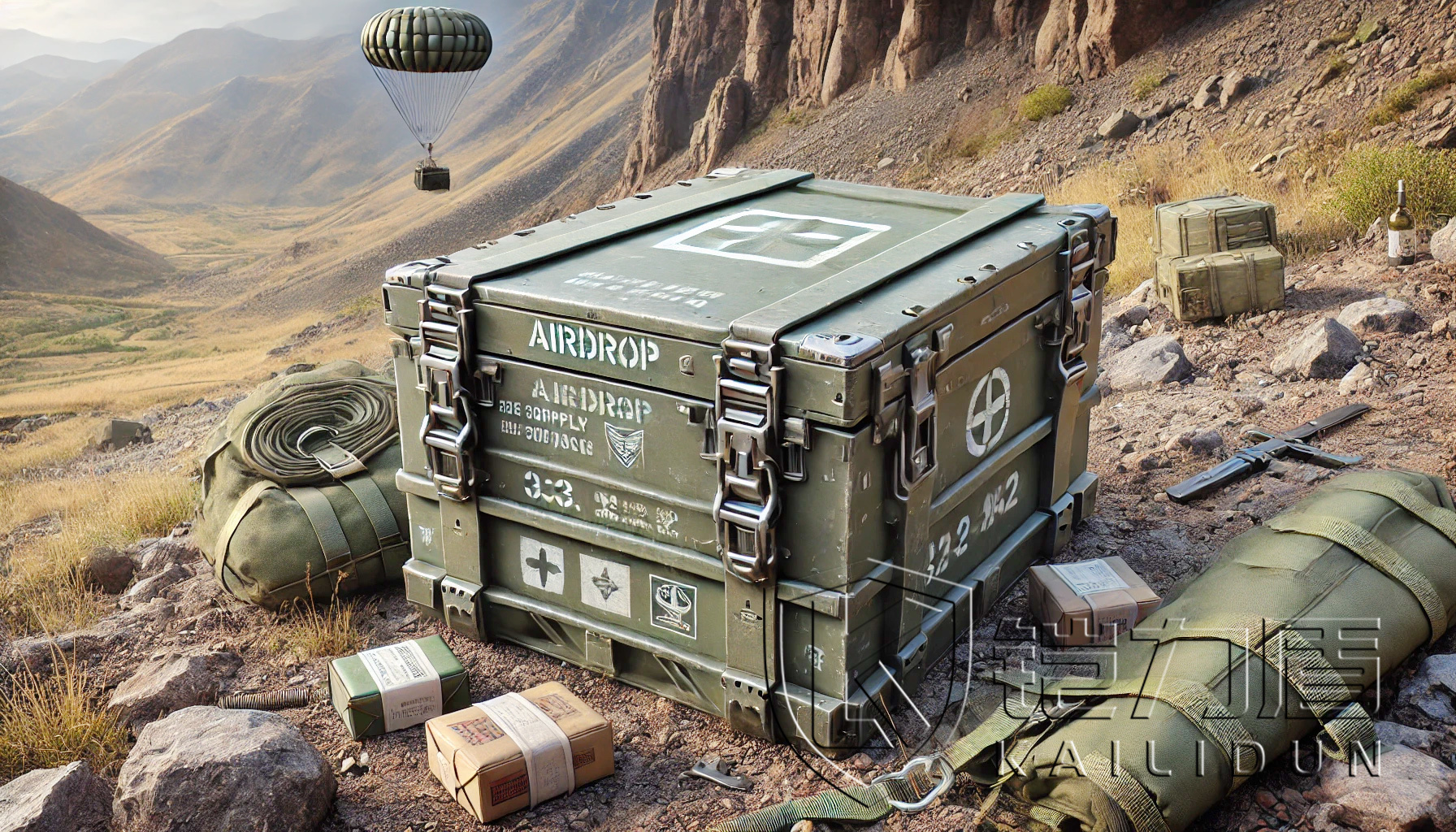
[Technological Evolution of Airdrop Supply Containers] From “Supplies” to “Smart” Solutions Traditional airdrop supply containers primarily carried basic necessities, but in recent years, driven by advances in technology, their designs have become increasingly intelligent.
1. Adaptive Unboxing Technology
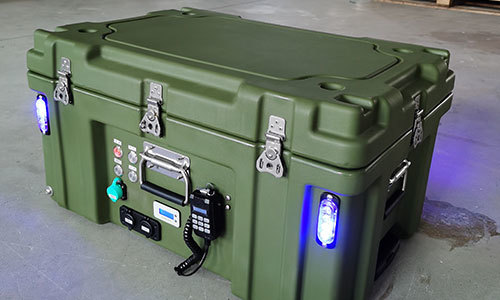
The Kaili Shield airdrop supply container can be custom‑configured to include a temperature‑control system, an automatically deployable tent, or a pharmaceutical‑sorting storage unit, providing users with more tailored support based on environmental conditions.
2. Real-time positioning and communication module
The Kaili Shield airdrop supply crate can be equipped with built-in GPS and communication modules, enabling survivors to send distress signals and even communicate with rescuers in real time.
3. Renewable Energy Support
To extend the service life of relief supplies, Kaili Dun airdrop containers can be equipped with solar panels, providing power for lighting, communication devices, and even medical equipment. This integration of technologies not only enhances airdrop efficiency but also significantly improves the living conditions of disaster victims.

The Kaili Shield airdrop supply crate comes with an airdrop hook, making it easy to secure to a rope.
In various emergency disaster scenarios, rescue teams have made extensive use of specialized supply containers equipped with built-in emergency lighting and communication devices, enabling them to locate survivors at night and significantly reducing search-and-rescue response times.
[Supply Chain Challenges Behind Airdrop Supply Boxes] Although airdrop supply boxes have proven highly effective in disaster relief, the supply chain issues they entail cannot be overlooked:
1. Resource Reserves and Allocation
Disasters often strike without warning, placing extremely high demands on relief agencies’ stockpiles and the speed of their resource deployment.
2. Cost Issues
A single airdrop operation often entails substantial costs for aviation fuel and equipment wear and tear, necessitating a balance between efficiency and cost.
3. Environmental Issues
Some airdropped supply containers may generate waste pollution after use, making the use of biodegradable or recyclable materials particularly important.
[Future Prospects for Airdrop Supply Containers] In various emergency and disaster scenarios, we have seen that airdrop supply containers are not only the result of advanced technology but also a testament to human-centered care. Looking ahead, we can anticipate developments in the following areas:
1. Modular Design
Based on the type of disaster and specific needs, different functional modules can be rapidly assembled to enhance rescue flexibility.
2. Data-Driven
Leveraging AI and big data analytics, we can accurately forecast disaster-area needs and optimize nearby airdrop routes.
3. Green Materials
By using environmentally friendly, biodegradable materials, we can minimize secondary environmental harm. In the face of disasters, the synergy of technology and humanity brings us greater hope. From traditional supply containers to advanced smart rescue equipment, every step forward reaffirms the original mission of technology: to serve life. The recent Korean airliner crash once again reminds us that, when confronting unpredictable risks, only sustained innovation and collaboration can help secure more possibilities for survival in times of crisis. Airdropped supply containers carry not just relief物资, but also a solemn commitment to safeguarding lives.
Key words:
rotomolding airdrop box | safety protection box | server rack box | aviation aluminum box | cold chain insulation box | fire cart
RELATED INFORMATION



A production-oriented enterprise focusing on the research and development, design, customization, production, sales and service of special safety protection boxes; "armored shield" aims to provide integrated packaging protection solutions for major instrument and equipment manufacturers, aerospace, fire protection, medical and other industries.


Contact Us
Service Hotline: 139-1747-5956
Service Hotline:137-6128-2604
E-mail:sales@kldcases.com
Company address: 703A, Building A8, Kangqiao Business Oasis, caohejing, Pudong New Area, Shanghai
Factory address: 500 Yedao Road, Xitangqiao Town, Haiyan County, Jiaxing City, Zhejiang Province

Sweep and add WeChat
Learn more about products
Links: